

Mirrors

 €6,500.00
Magnificent French mirror from the Louis XV period (circa 1750), crafted in a richly carved softwood frame. The frame is pierced and finely sculpted with flowers, acanthus leaves, and volutes, showcasing the elegance and movement typical of the Rococo style.
The gilded surface highlights the refined craftsmanship of 18th-century French artisans.
With mirrored background, renewed central mirror plate, and mint-colored side panels.
Dimensions: 167 × 94 cm.
Restored condition, gilding retouched.A striking example of French Rococo artistry – a decorative masterpiece that adds timeless charm and sophistication to any classic or contemporary interior.
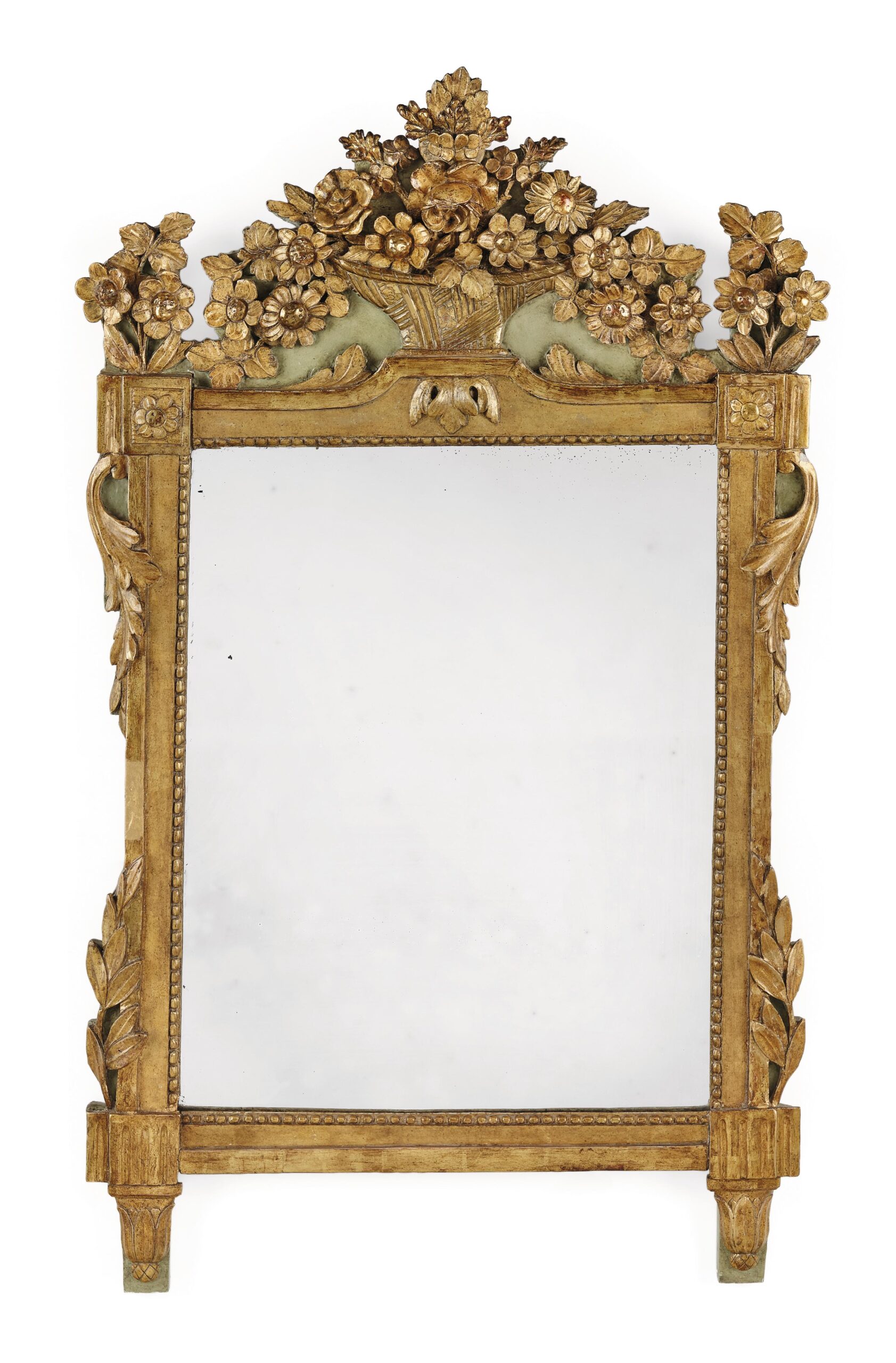 €2,000.00
Louis XVI period, c. 1780, softwood, moulded and richly carved in the form of a flower basket, flowers and leaves, mint-coloured and gold-painted, supplemented mirror panel, 112 x 67 cm, beautiful, well-kept general condition.
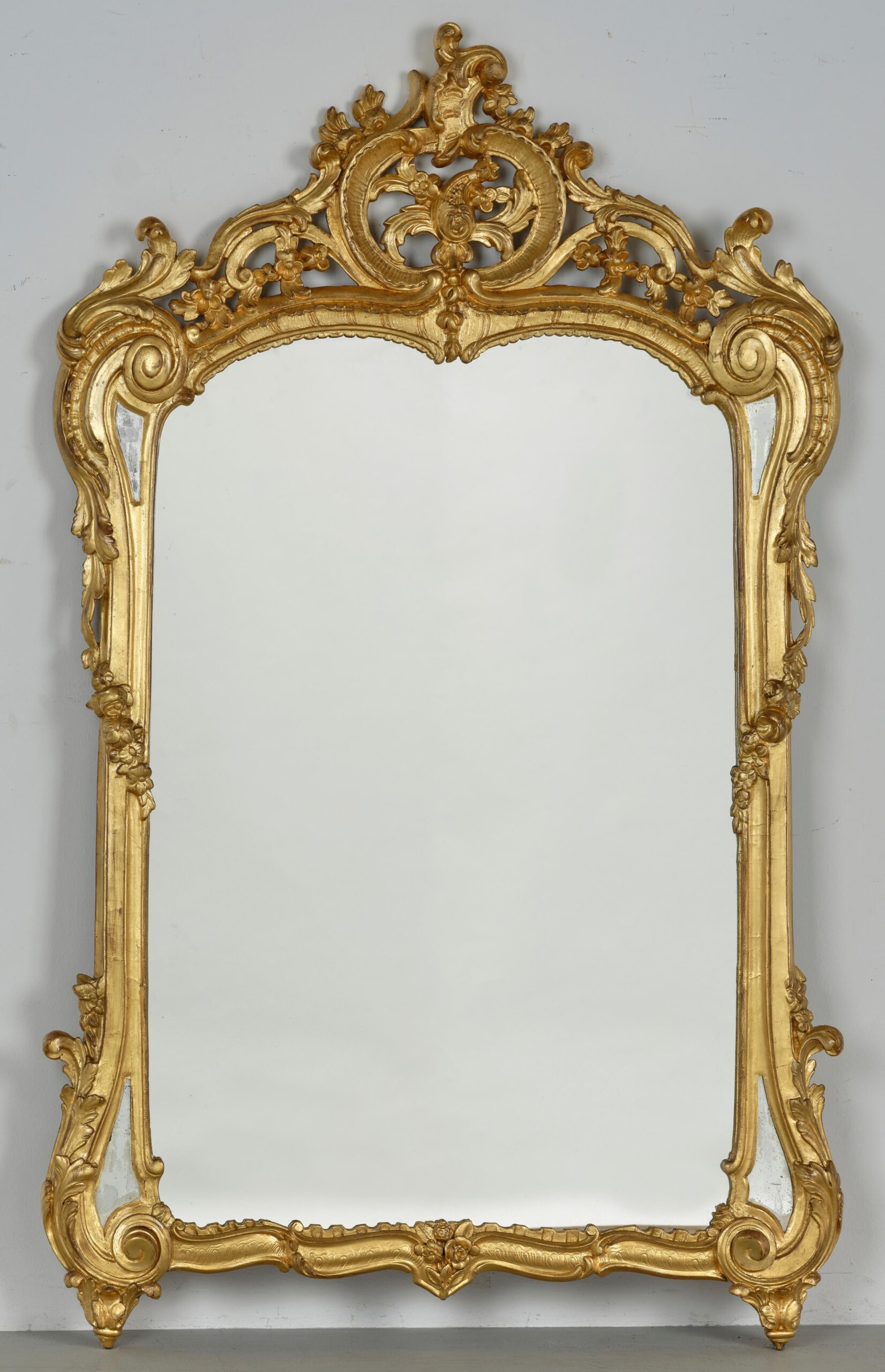 €6,800.00
Louis XV period, France mid 18th century, profiled softwood frame carved in the form of rocailles, acanthus leaves and volutes, set in gold, renewed mirror panel, 176 x 110 cm, beautiful restored condition, reworked frame.
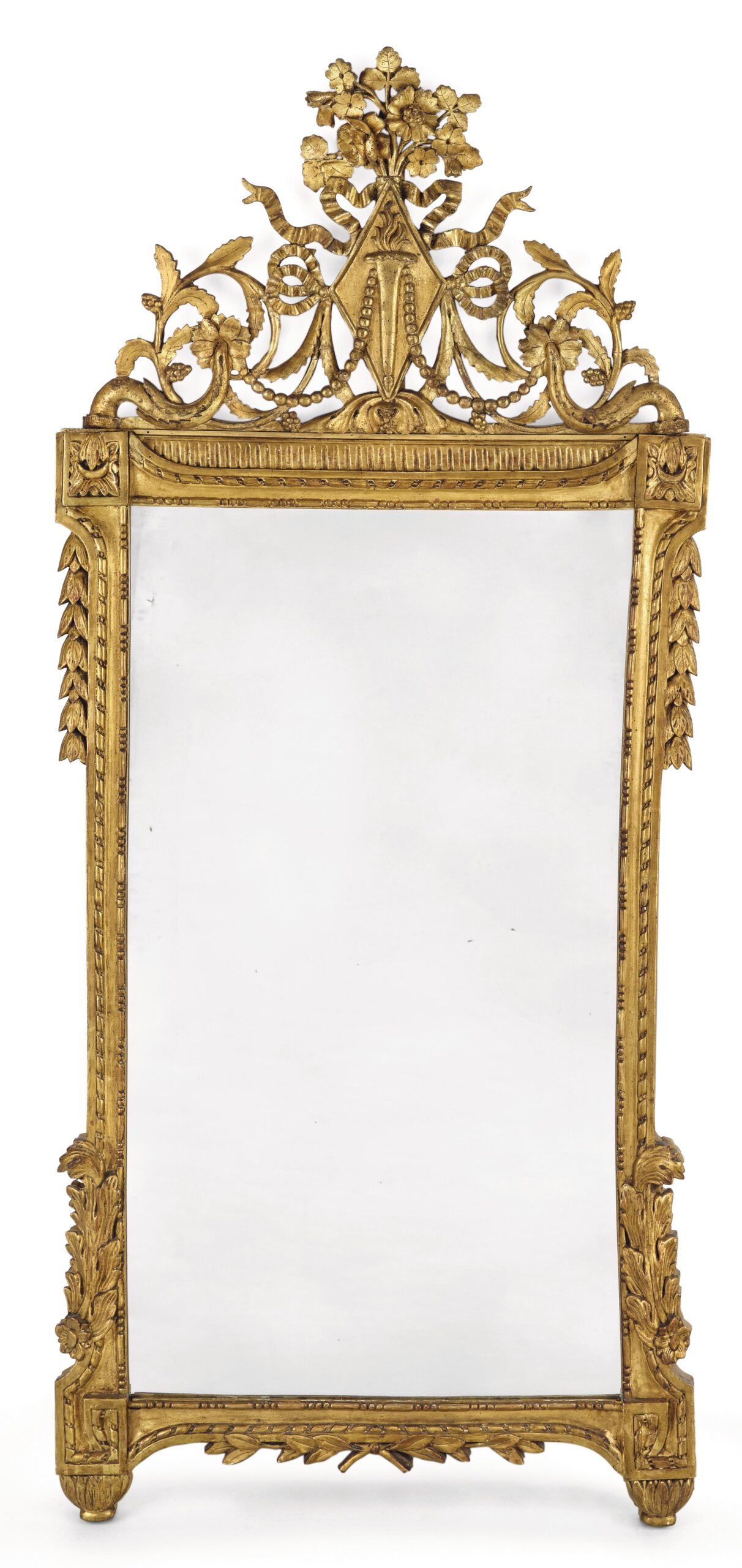 Sold
SoldFrance, Louis XVI period, c. 1780, finely ornamentally carved softwood frame in the form of leaves, flowers and loops, gold-painted, renewed mirror panel, pierced top, 173 x 76 cm, largely original condition with minor retouches.
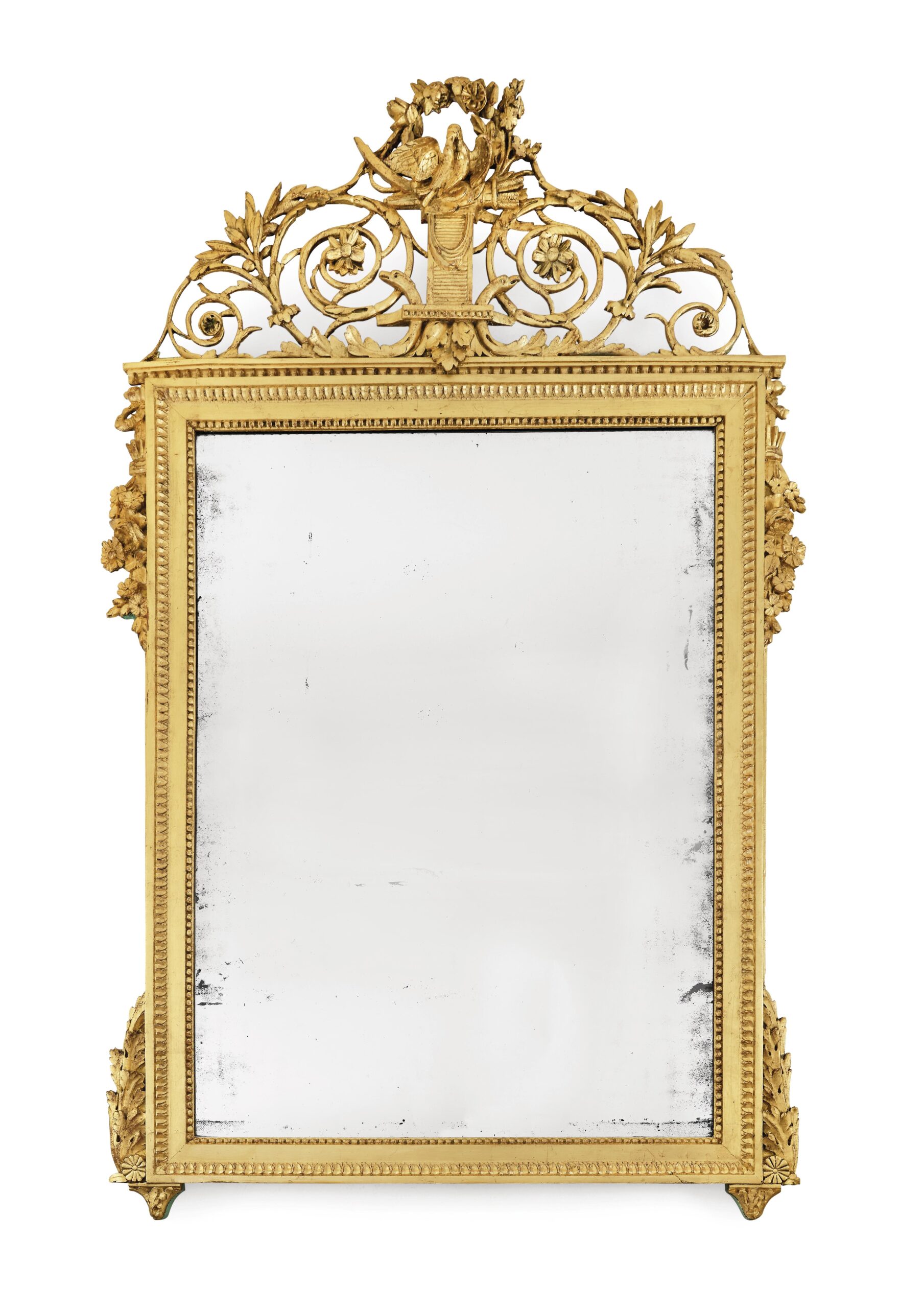 Sold
SoldFrance, c. 1770/80, moulded softwood frame, in the form of of stylised blossoms, laurel leaves and a pair of doves, gilt carved, gilded, mirror panel slightly stained, 160 x 103 cm, beautiful restored condition, small parts replaced.
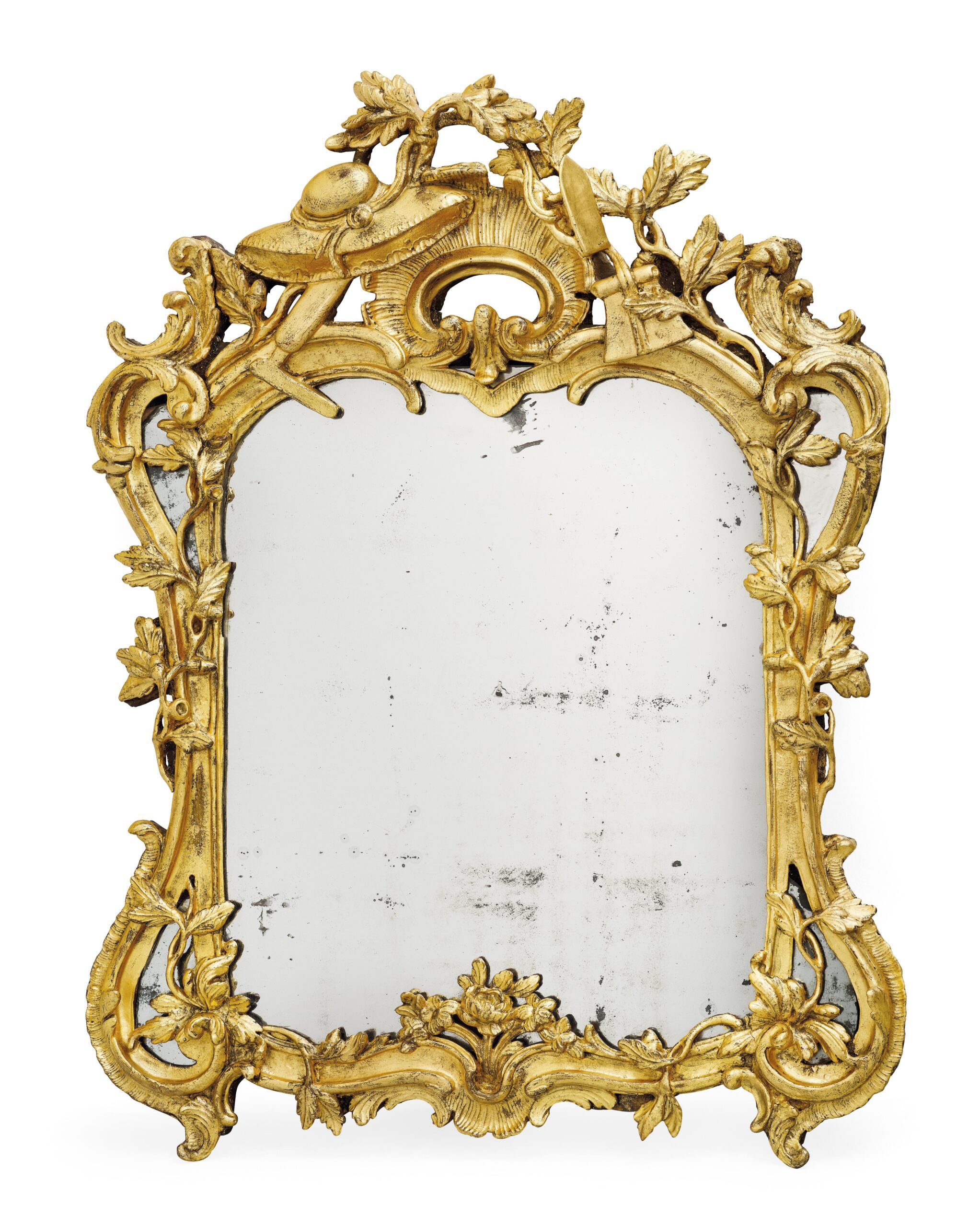 €3,200.00
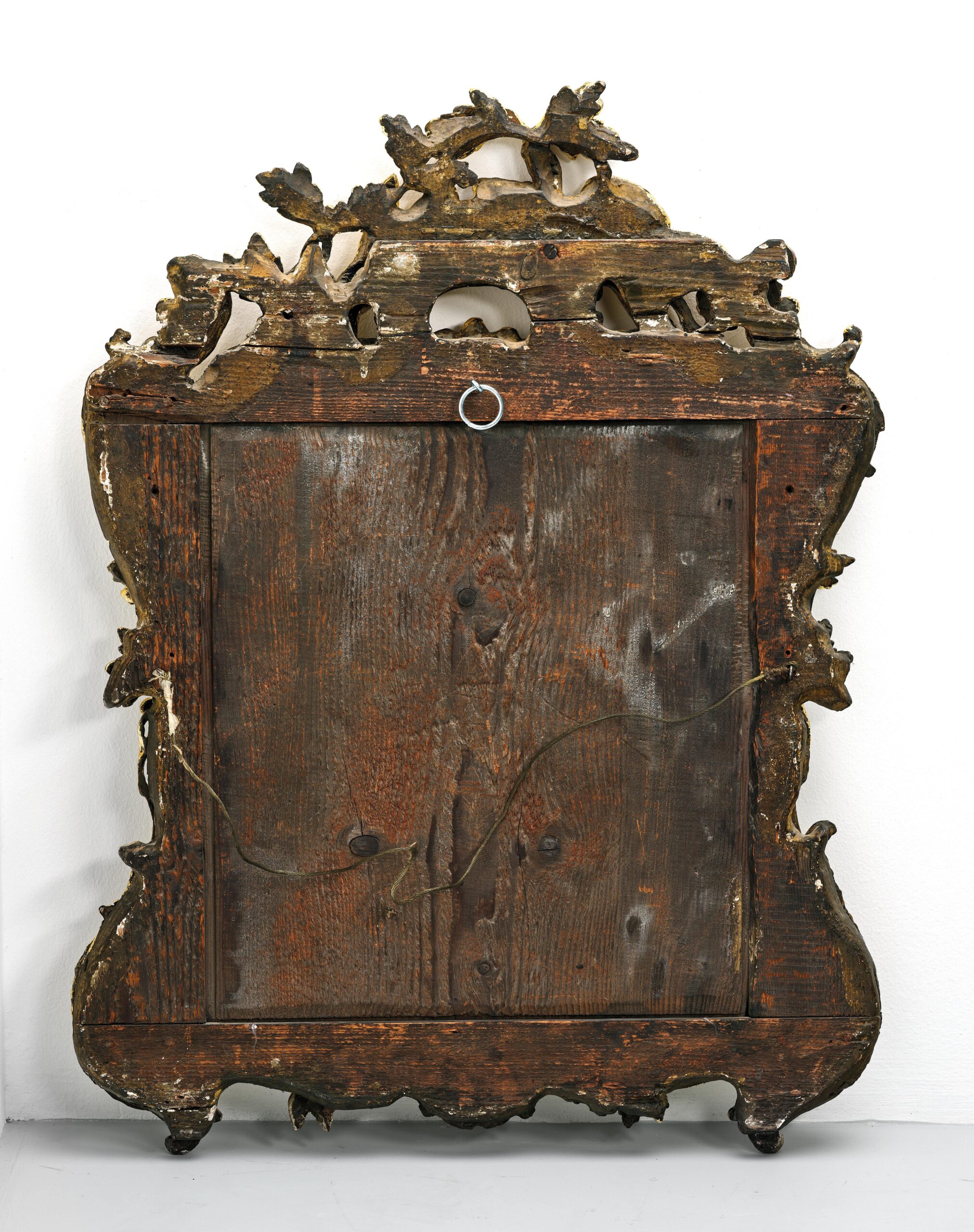
Beautiful french golden mirror from the second half of the 18th century, profiled softwood frame. Softwood frame, carved in the shape of leaves, a hat and garden tools, gold mount, mirrored panel, slightly spotted. Dimension: 92 x 68 cm. Nice and well-kept general condition, the frame has been reworked.
 Sold
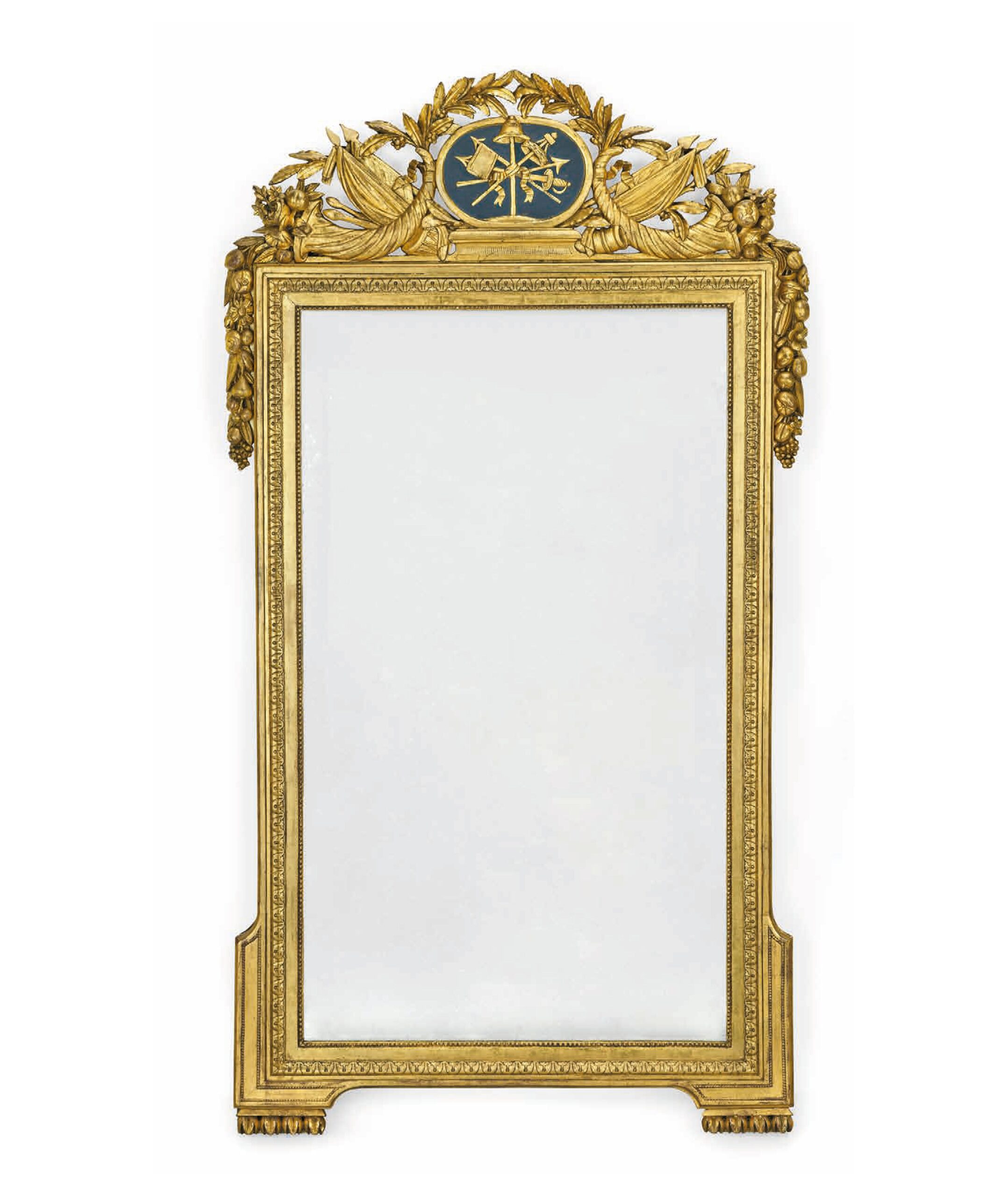
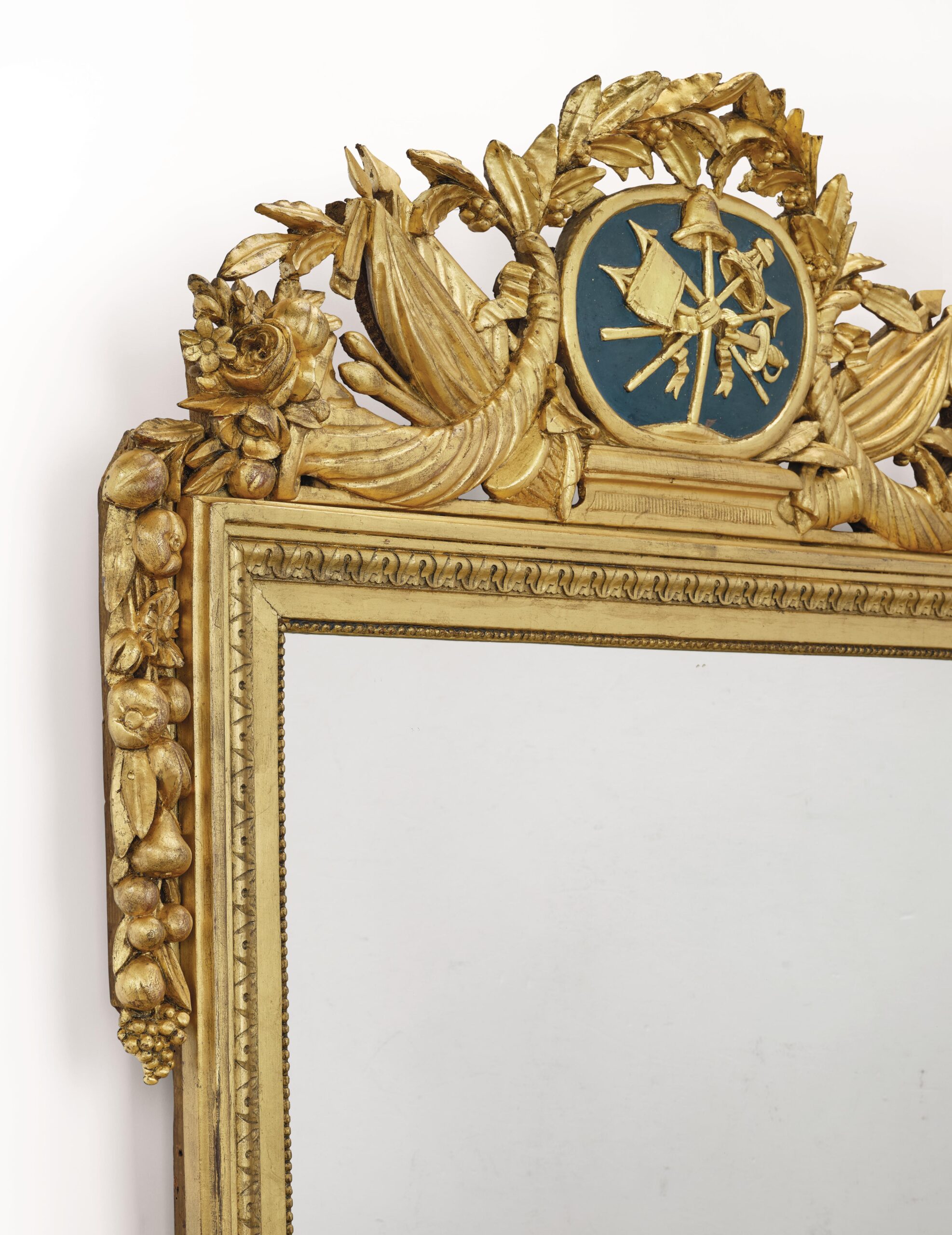
SoldMagnificent antique Louis XVI mirror from France, around 1770. The large Grand Salon mirror features a finely profiled softwood frame, richly decorated with hand-carved floral festoons, cornucopias, and laurel leaves. The elegant grey and gold finish and openwork design highlight the sophisticated craftsmanship of the 18th century. The mirror panel has been renewed, and the piece is in beautiful restored condition.
Dimensions: 190 × 104 cm
Condition: Restored

The History of Mirrors – Discover Antique Masterpieces
Mirrors are not just practical everyday objects; they are fascinating antiques with a long and rich history. Over 7,000 years ago, the first mirrors were made from polished obsidian, a volcanic rock, and were found in ancient Ottoman tombs. These early artifacts mark the beginning of a journey that continues to captivate us today.
Antique Mirrors: The Origins of Reflection
In ancient times, people used polished bronze and copper plates as mirrors. The Romans took it a step further by crafting silver mirrors, which symbolized luxury and wealth.
The discovery of glass in Sidon in the 2nd century laid the foundation for modern mirrors. By the 14th century, convex mirrors made from blown glass were being produced, though they were accessible only to the wealthy elite.
Venetian Mirrors: Masterpieces from Murano
A major breakthrough in mirror-making came in the 15th century with the glassblowers of Murano, near Venice. They created flat crystal mirrors coated with mercury, renowned as the finest of their time. This technology was so valuable that it was kept a closely guarded secret. Venetian mirrors from this period remain among the most sought-after antiques today.
The Influence of Louis XIV: Mirrors as Art and Status Symbols
French King Louis XIV recognized the importance of large mirrors for interior design. By establishing the Royal Mirror Manufactory in France, he enabled the creation of the famous Hall of Mirrors at the Palace of Versailles. Mirrors became an integral part of luxurious interiors and were considered valuable works of art.
Ornate Frames: Mirrors in the 17th to 19th Centuries
From the 17th century onwards, mirrors were adorned with elaborate frames, often carved and gilded wood. These frames transformed mirrors from functional objects into true works of art that defined interior spaces. Mirrors from the Baroque and Rococo periods are especially prized by collectors today.
The Development of Modern Mirrors
In the 19th century, mercury coatings were replaced with silver due to the toxic nature of mercury vapors. Today, mirrors are coated with aluminum, but the charm and historical significance of antique mirrors remain unmatched.
Explore Our Collection of Antique Mirrors
From gold-framed mirrors of the 18th century to Venetian masterpieces, we offer a carefully curated selection of antique mirrors. Each piece tells its own story and serves as a striking highlight for your collection or interior design.
➡️ Discover our antique mirrors now!
Why Buy Antique Mirrors?
- Historical Significance: Each piece is a testament to past craftsmanship.
- Uniqueness: Every mirror is one of a kind – owning one means owning a true artifact.
- Value Appreciation: Antique mirrors are not only decorative but also an investment.
Frequently Asked Questions (FAQ) About Antique Mirrors
What makes antique mirrors special?
Antique mirrors are not just functional objects but also works of art that combine history and craftsmanship.
How do I care for antique mirrors?
Avoid harsh cleaning agents. Use a soft cloth and specialized glass cleaners to maintain their original condition.